![How To Become a Full Stack Developer [2023 Career Guide]](https://www.springboard.com/blog//wp-content/uploads/2021/12/how-to-become-a-full-stack-developer-2023-career-guide-800x533.jpeg)

IN THIS ARTICLE
- Is It Hard To Become a Full-Stack Developer?
- What Does a Full-Stack Developer Do?
- How To Become a Full-Stack Developer: A 10-Step Guide
- Is Full-Stack Development the Right Career for Me?
- Becoming a Full-Stack Developer: Real-Life Examples To Learn From
- What It’s Like Working as a Full-Stack Developer
- How Much Can You Earn as a Full-Stack Developer?
- Resources for Full-Stack Development Jobs
- FAQs on Becoming a Full-Stack Developer
Get expert insights straight to your inbox.
There are two sides or “ends” to every website or app that you use. There’s the front end, which is sometimes called the “client-side” because it’s what users see when they open an app. But there’s also the back end, sometimes called the “server-side”—this is what’s under the proverbial hood.
While there are front-end and back-end developers who specialize in each of these respective pieces of the development process, there are also full-stack developers, who are able to do both. Full-stack developers make more than back-end or front-end developers and are in demand because they have a thorough understanding of how the front-end and back-end of an app interact.
Want to know how to become a full-stack developer? Then you’re in the right place. Below, we’ll tell you everything you need to know about becoming a full-stack developer.
Is It Hard To Become a Full-Stack Developer?
No, it’s not hard to become a full-stack developer if you have a plan. Whatever route you choose—whether it’s a college degree, a bootcamp, or the self-taught route—make sure that you have a plan that’s achievable. Also, consider where your strengths lie, and whether it makes more sense to learn front-end or back-end development first.
What Does a Full-Stack Developer Do?
Full-stack web developers develop software (websites, apps, etc.) on the client side and the server side. In other words, they’re a front-end developer and a back-end developer all in one.
How To Become a Full-Stack Developer: A 10-Step Guide

Here are the steps to take to launch a career as a full-stack developer:
-
Obtain the Requisite Education
-
Master the Essential Programming Languages and Tools
-
Develop Your Skillset
-
Pursue Volunteer, Open-Source, or Freelance Work and Participate in Coding Challenges To Build Your Portfolio
-
Create a GitHub Profile
-
Your Network Is Key
-
Pursue a Full-Stack Development Internship
-
Find a Mentor
-
Ensure Your Resume Is Up-to-Date and Start Applying for Jobs
-
Do Coding Exercises Daily
Obtain the Requisite Education
While a solid education will lay the groundwork for your full-stack development career, there are many different paths you can take. Let’s take a look at some of them.
Foundational Knowledge
Before you pursue a degree or online program, it’s a good idea to have some foundational knowledge of full-stack development. This includes basic computer skills, knowledge of basic design principles, and a beginner’s understanding of HTML and CSS. You’ll learn about all of these topics in more depth later, but for starters, it’s good to have a cursory familiarity.
Formal Education / University Degree
A college degree isn’t absolutely necessary to become a full-stack developer, but it is one of the most traditional career paths. If you go this route, consider a bachelor’s degree in computer science, software development, or software engineering.
Bootcamp
Bootcamps get you career-ready, and at a fraction of the time and cost of a traditional college university. Some bootcamps, like Springboard’s Software Engineering Bootcamp, even offer a money-back guarantee if you don’t land a full-stack development job shortly after graduation.
Self-Taught Route
This is possibly the most challenging route and is not for everyone. And you’ll have to do a lot more planning than if you go the bootcamp or university route. There are plenty of videos available on YouTube that can teach you about full-stack development, but if you’re going the self-taught route, then you’ll also want to get under the hood and look at actual code—GitHub is a great place to do this.
Master the Essential Programming Languages and Tools
Let’s take a look at the programming languages and tools you’ll need to master:
Programming Languages
JavaScript is by far the most essential programming language for full-stack developers. After you are confident with JavaScript, consider learning React, LeetCode, Node, Python, PHP, and C#.

Tools
Beyond programming languages, you need to be comfortable working with the following tools:
- Text editors like Visual Studio Code and Atom
- Terminals or consoles to run your commands and code
- Database storage for the websites or mobile applications you are trying to build
- GitHub
Develop Your Skillset

Your education is just the beginning of honing your full-stack developer skills. Here’s what you’ll need to continue learning:
Technical Skills
These technical skills are essential:
- Navigating JavaScript environments like NodeJS and ExpressJS and their related frameworks.
- Working with web hosting platforms to deploy applications. Examples include Amazon Web Services, Heroku, Microsoft Azure, etc.
- Knowing how to use UI (user interface) and API (application programming interface) libraries throughout the front-end development process.
Soft Skills
Being a full-stack developer isn’t just about your technical know-how. You also need a set of soft skills, which include:
- Communication. You have to be able to explain your work to non-technical stakeholders and collaborate with various teams to finish each project. Communication is key to all of this.
- Adaptability. As a full-stack developer, you’ll be responsible for both the front-end and the back-end of applications. So you’ll need to be adaptable when jumping between the two.
- Project management skills. This will come in handy, especially later in your career, as you begin to manage front-end and back-end teams.
Pursue Volunteer, Open-Source, or Freelance Work and Participate in Coding Challenges To Build Your Portfolio
A full-stack developer portfolio is proof of your expertise. To build this, volunteer to create apps and websites for local businesses. You can also take up small freelancing jobs. Keep an eye out on websites like Hackathon and HackerEarth for coding challenges.
Create a GitHub Profile
A GitHub profile is a great way to exhibit your portfolio. You can also connect with other developers, and collaborate with them. Through GitHub, you can share code files easily and track different versions within each project.
All professional developers have GitHub profiles. Companies often mandate this, so knowing your way around GitHub as one of the essential version control systems is necessary.
Your Network Is Key
Your network can be a shortcut to landing internships and jobs. Here are some ways to build that:
- LinkedIn. Connect with leaders in your industry and engage with their posts. This will make you more visible and can form the basis of fruitful relationships.
- Online communities. When you hit a snag during a project, use online communities like Reddit and GitHub. But make sure that you’re helping others too! Adding value to these communities is a great way to build your network.
- Conferences and in-person meet-ups. If you prefer old-school, face-to-face networking, then this is the route for you.
Pursue a Full-Stack Development Internship
Once you have a portfolio and some education, you can start to apply for internships, where you’ll be able to apply your knowledge.
Find a Mentor
Mentors can be an incredible resource. Finding one is a bit trickier. Rather than pursuing a stranger, let this sort of relationship develop organically over time—an internship is a great place for this to happen.
Ensure Your Resume Is Up-to-Date and Start Applying for Jobs
Once you’ve got some experience—either in the form of internships or a portfolio—you can start applying for jobs. Make sure that you’re tailoring your resume for each position so that recruiters know that you’ve considered the role thoroughly and that you aren’t just applying at random.
Do Coding Exercises Daily
At some point during the interview process, you’re going to need to do a coding exercise, which is usually about 30-40 minutes long. So as you’re applying for jobs, practice coding every day. It’s a great way to solidify your knowledge and can help alleviate the nervousness that often comes with job hunting.
Get To Know Other Software Engineering Students

Pritisha Kumar
Software Engineer at Dialpad
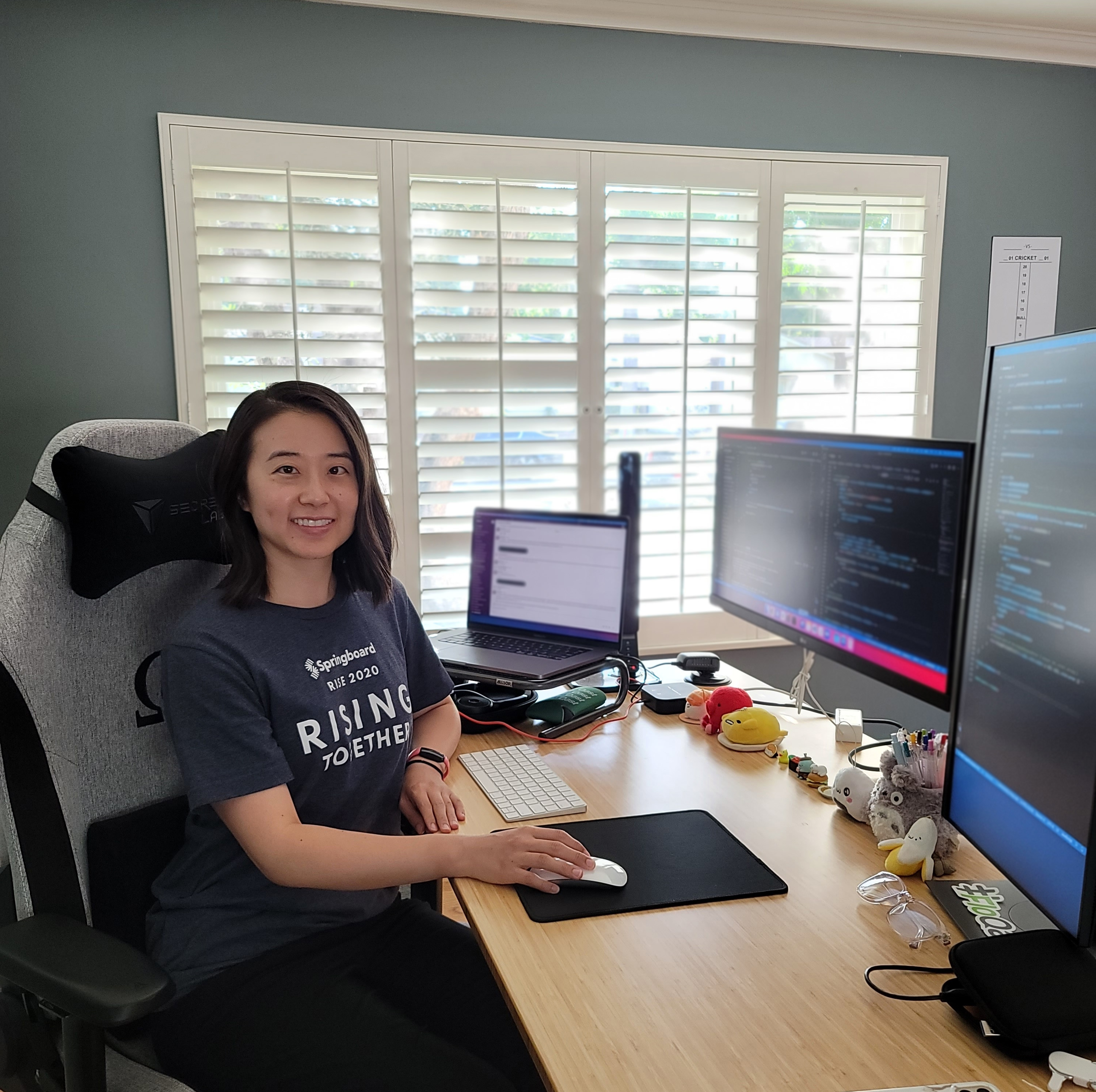
Kristy Chu
Software Engineer at FloQast

Matthew Dillon
Front End Developer at LaunchBadge
Is Full-Stack Development the Right Career for Me?
As a full-stack developer, you’ll be working on both front-end and back-end development. Some developers find that this kind of multi-tasking kills their productivity. Others feel that switching back and forth helps them not get bored. You should also know that full-stack development involves lots of coordination and collaboration, so it’s a career that’s best for those who work well with others.
Becoming a Full-Stack Developer: Real-Life Examples To Learn From
Here are two very different examples of how you can become a full-stack developer:
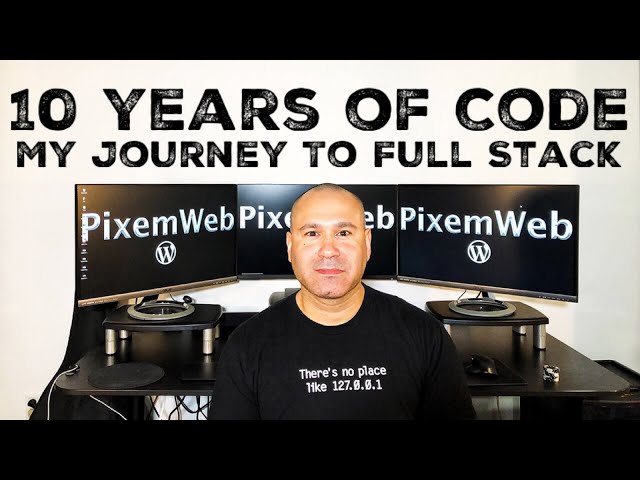
Fernando De Vega
Fernando is a senior full-stack engineer who studied telecommunications in college. He did software engineering projects in college as a side hustle and pursued web development after graduation.
His advice? Leave your comfort zone when you’re learning, and don’t be afraid to rely upon online tutorials. Become familiar with numerous technologies, even if you don’t specialize in them. All of this will make you a formidable full-stack developer.

Joel Rivera
Joel’s story could not be any more different than Fernando’s. He realized how much companies charge for creating websites, so he learned how to code. Joel started with HTML and moved on to CSS. A real estate agent originally, Joel used his own personal website to apply everything he learned. Clients and competitors complimented his website and then asked for his help to create their own.
What It’s Like Working as a Full-Stack Developer
Here’s what the day-to-day life of a full-stack developer looks like:
Be Prepared To Use Any Skill at Any Moment
Alex Swan, a full-stack developer at Leansquad, had this to say about flexibility and adaptability:
“You have to know how HTML works, how CSS can be used to style HTML in one of a million ways, then maybe you want some kind of interaction. Immediately you are confronted with hundreds of web frameworks/libraries, all with different practices for essentially doing the same thing.
Sharing and Working Solo
David Hortsman, a software engineer and full-stack developer at Clipboard Health, had this to say about achieving the right balance of independence and collaboration:
“One of my favorite parts of this job is that I have plenty of opportunities to collaborate and plenty of opportunities to work independently. Most of the work I do to support collaboration is still independent, as I typically express my thoughts via asynchronous communication, like project plans and emails. All of that being said, software engineering (like all forms of engineering) really is a team sport, and I almost never create anything that is solely ‘mine.’ Every line of code is the result of collaboration from the planning phase all the way through code review.”
Filling the Void
Being a full-stack developer means that you’ll be a jack-of-all-trades. Hortsman had this to say about what that entails:
“Some days, I’ll get into a flow state and write code for several hours straight. On other days, I do mostly ‘support work,’ helping others debug code issues, coordinating future plans in Slack conversations and video meetings, and contributing to written documentation.”
How Much Can You Earn as a Full-Stack Developer?
Full-stack developer salaries vary greatly, depending on where you are in your career. Here’s what that looks like:
Entry-Level Full-Stack Developer
Entry-level full-stack developers make an average of $63,752 a year:

Mid-Level Full-Stack Developer
Mid-level full-stack developers earn a bit closer to six figures:

Senior Full-Stack Developer
Senior full-stack developers earn well over six figures:

Resources for Full-Stack Development Jobs
Looking for a full-stack developer job? Here’s where you should be searching:
LinkedIn is a goldmine for career advice and job openings and should be your first stop.
Job Boards
Job boards like Stack Overflow, Dice.com, AngelList, F6S, and Mashable are all great places to look for full-stack developer jobs.
Network
If you’re looking for a job, let your network know. People in your network can vouch for you, and get your resume to the top of the pile for consideration.
Slack Communities
Tech communities on Slack, like #DevChat, are great places to connect with other full-stack developers. You can also try specific programming channels, such as PySlackers, Elixir, and Elm.
FAQs on Becoming a Full-Stack Developer
We’ve got the answers to your most frequently asked questions:
Can You Become a Full-Stack Developer Without a Degree?
Yes, but it helps if you’ve completed full-stack development bootcamps before you start applying for entry-level roles.
How Long Does It Take To Become a Full-Stack Developer?
If you have no experience, getting familiar with the basics will take six months to a year. But remember, as a full-stack developer, your education journey is never over. Continue learning to stay up to date with the latest technologies.
Is Full-Stack Development Stressful?
Full-stack development jobs involve tight deadlines and high-pressure environments, so it depends. Some people thrive with deadlines, while others find them daunting, so it depends on your temperament.
Do Full-Stack Developers Need To Know How To Code?
Yes. JavaScript is the most important language, but hiring managers might also want to see that you have proficiency with HTML, PHP, SQL, and CSS.
Do Full-Stack Developers Get Paid More?
Yes, full-stack developers do make more than front-end or back-end developers, but that difference in salary often doesn’t become apparent until later in one’s career.
Since you’re here…
No one wakes up knowing how to code – they learn how to code. Tens of thousands of students have successfully learned with our courses, like our Software Engineering Bootcamp. If you’re a total newbie, our Software Engineering Career Track Prep Course will be a perfect fit. Let’s do this!